
Enter your email address to receive occasional offers and tips!
Sign UpThere was an error subscribing to our email list, please try again.
Don't worry. We will not share your email address with any third parties.
There was an error subscribing to our email list, please try again.
Don't worry. We will not share your email address with any third parties.
Browse all wood cutting boards below. Shop by size: Large or Small. Or click on an image to shop a particular type:
It has been shown that high-quality wood cutting boards featuring tight grain structure and small pores are superior to other materials, including plastic, when it comes to health benefits. In a 1994 study, bacteria loaded onto pristine wood surfaces were not recoverable from the surface a short time later, nor could bacteria be recovered from used wooden boards marred with numerous knife cuts. In contrast, bacteria loaded on to new plastic surfaces persisted, and they thrived on used, knife-scarred plastic. (Ak, N. O., D. O. Cliver, and C. W. Kaspar, 1994).
Any cutting board used to prepare raw meat then other uncooked food, if not properly cleaned in between, can become an accomplice in the spread of bacteria. You should always wash a cutting board or chopping block with soap and water after using it to chop fresh meat. A very dilute solution of bleach and water is best for disinfecting wooden cutting boards.
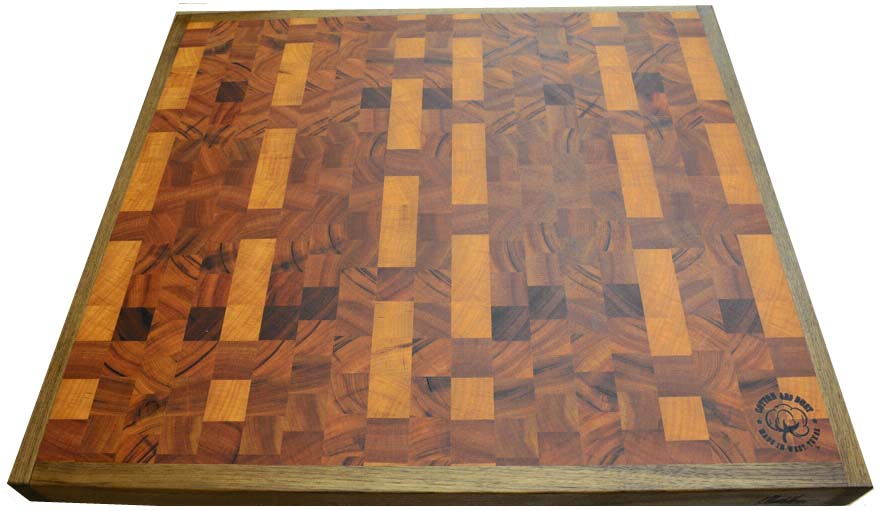
Knife blades dull more quickly when used on cutting boards made of unforgiving surfaces such as plastic. If it's important to you to keep your cutting board looking newer longer, as well as your knives, you should seriously consider end-grain-style butcher block. In the case of an end-grain cutting board, the cut ends of wood pieces form the surface of the board. The exposed wood fibers of these cut ends better absorb knife blades, so they are less likely to dull knives or to show scarring themselves.
See all Cutting Boards